Training to be Beautiful
Body image, self-worth, and what it means to be beautiful
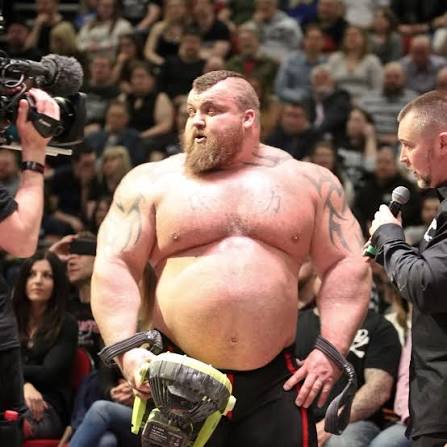
As we creep into the latter months of 2026, I’m coming up on nine years of strength training (cue a meme lamenting how many hundreds of chickens had to die, all for this mid physique). Most of that training was anything but effective. Blood rushes to my cheeks when I think about my sixteen-year-old self telling my friends, “I don’t want to get that big.” Don’t worry, bud, you won’t, no matter how hard you try. I cringe remembering when I used to train seven days a week in college while sleeping half as many hours as I should have. It definitely didn’t make me much stronger, but then again, it wasn’t the least productive method of self-flagellation. Along the way, I’ve consumed several thousand hours of the best content the Large Men of YouTube have to offer, participated in a couple of powerlifting meets, and bantered with quite a few gym bros and gals between heavy breaths.
I’ve gained more from lifting than I ever could have expected the first time I awkwardly wrapped my soft fingers around a barbell. It has shaped me literally, provided me with a mental space where worries are replaced with a soothingly deafening roar, plastered my right shoulder with slabs of scar tissue, and helped build relationships with some of my closest friends. Lifting has also taught me lots. There are the obvious learnings related to physiology, training methodologies, or even mental fortitude. The one I want to talk about in this post is about body image, or, more broadly, beauty. It’s a subject I’ve encountered constantly in the gym community, but have had the privilege of not having to think about much of the time.
Before going further, I want to acknowledge that body image issues tend to afflict women more harshly than men, likely because women experience greater differentiation in treatment based on appearance than men do. That said, there are many throughlines in the causes and effects of body image issues that are true regardless of gender. I’ll do my best to be general in this post, but as I haven’t lived women’s experience of the issue, I may miss some important aspects. If you notice one, please point it out in the comments.
In this post, I want to share some thoughts on appearance and self-worth, and how physical practices like lifting can affect them. It is a common but painful plight to believe not only that one is not beautiful, but that one’s ugliness reflects on one’s unworthiness as a person. Some of the supposedly body-positive narratives we tell ourselves to feel better involve self-deception and misunderstandings of what beauty is. Real freedom from the pain of not feeling beautiful is achieved by separating one’s sense of worth from appearance, but that proves incredibly hard to do. Physical training of various sorts can help build a relationship to one’s body that bypasses appearance, but also runs the risk of becoming its own source of misplaced self-esteem.
Defining Beauty
What does it mean for something to be beautiful? I think it is not an innate property of the thing, but rather an opinion of someone perceiving the thing. Going further, one could say beauty is something done to a thing by an observer. When we admire a painting, immerse ourselves in a piece of music, or wonder at a stunning vista, we make the object of our perception beautiful. The same is true for people: on our own, we are not beautiful, but we can be made beautiful by others.
While it is easy to intellectually understand that beauty is not something we inherently are, the dramatic effect of appearance on the way we are treated makes it much harder to internalize the same message emotionally. Being considered beautiful is fucking awesome. It colors nearly every human interaction, and most of them for the better. Having gone through a bit of a glow-up in my early 20s, I’ve found the difference in treatment striking. It’s as if everyone suddenly became 30% nicer. Conversely, when I interact with people I find good-looking, it feels as though there’s some voice whispering in my ear to seek their approval. Being aware of my implicit bias can help to counteract some of it, but like most implicit biases, I have no doubt it creeps into my actions plenty. And I’m sure I’m far from alone in this.
As a social species, it is no surprise that when we learn our value to other people is affected tremendously by appearance, we internalize this understanding to the simpler idea that our worth as people is inextricably tied to what we look like. The coupling of the two helps to bring about all manner of unpleasantness, including eating disorders, thousand-dollar skincare routines, bone smashing, and heaps of self-loathing. To clarify, I am not saying that associating one’s appearance with one’s value is a mistake that can simply be un-thought. It is a lived reality for all of us to varying degrees, and it is produced by social forces beyond our control. No matter how much we’d like to, next to none of us are ever going to be able to stop treating people at least somewhat differently based on how they look.
Believing We Are Beautiful
When we struggle with feeling that our worth is tied to our appearance, the most common advice we see is that we ought to learn to believe that we are, in fact, beautiful. I understand that this belief helps patch the feelings of unwantedness and self-hatred that come with thinking we are not beautiful. Yet, it fails to do the important work of detaching beauty from our value as people. If anything, it reinforces the connection. When we move toward seeing beauty as something done to us rather than a trait of ourselves, believing we are beautiful stops making much sense. Does it mean we believe that others think we look good? Our beauty, or how others perceive our appearance, remains unaffected by our opinion of whether or not we are beautiful.
Trying to believe that one is beautiful necessitates a level of unhealthy self-censorship. Wanting to change one’s body to be perceived as more beautiful becomes heresy because it implies the current body is not beautiful. I have lost count of the number of worried glances I have drawn by telling people that I’m going on a cut, or that I wish I had broader shoulders. I have seen so many people tie themselves in knots trying to explain why they diet, lift weights, or wear certain clothes. Euphemisms like “I do it for me” or “it makes me feel confident” come to mind. However, wanting to alter one’s appearance to be more appealing to other people can be completely fine. More generally, doing something just because it makes people like you is okay. That incredibly human social drive is the cause of the vast majority of the good deeds our species has ever undertaken, even if we love to argue otherwise. As long as we understand the shape of our body has nothing to do with the shape of our character, there is nothing inherently wrong with trying to look better to earn others’ approval.
The messy part here is that the outward manifestations of a steep calorie deficit motivated by self-hatred and one motivated by the thrilling and benign desire to look absolutely diced are exactly the same. We can only ever know for ourselves how healthy or problematic our relationship to our appearance is. I think it is due to this unknowability that policing our actions and language has become the more popular way to fight body dysmorphia. Separating one’s body and self-worth is much harder. Actions and words are easier to measure, and rely on vacuous but comforting self-talk rather than the painful honesty required to examine the degree to which our actions are motivated by misplaced self-worth.
Building a Better Relationship with Our Bodies
While there is no simple path to separating our sense of self-worth from our appearance, developing a deep relationship with one’s body independent of what it looks like can help. In our modern lives, we rarely need to use our bodies to meet survival needs, making it easier to value them only for their appearance. We no longer need to run long distances to obtain food. For many in the developed world, painful sensations like hunger and cold that were once everyday enemies are now easily vanquished with DoorDash and heaters. It becomes all too easy to forget that our bodies are still the medium through which we experience every part of life. It is through them we are able to enjoy the company of our friends, indulge in the bliss of falling asleep, lose ourselves in the rapture of sex, and also suffer through the diverse pains life has in store for us.
Unlike beauty, sensations and feelings are independent of any external observer, as are capabilities like strength, speed, or flexibility. These are also aspects of ourselves we have meaningful control over. Every winter, I get to feel the incomparable thrill of hitting highway speeds on snow, thanks to years spent skiing headlong into snow banks (not to mention emptying my and my parents’ wallets). Simple bodily habits such as eating a healthy diet, sleeping well, and staying active can make us feel significantly happier day to day. Lifting has unlocked for me a wealth of physical capacities and sensations that I would now struggle to live without. Physical practices like these remind us that our bodies are ultimately our own and do not belong to observers. They also build a relationship to the body as a vessel of enablement and joy, rather than a symbol of our worth.
From the highly anecdotal evidence of talking to gym people and other athletes, I have seen that training hard in some kind of physical activity seems to correlate with less crippling coupling of appearance and self-esteem. And this is very non-data-scientist of me, but I do believe the relationship is at least somewhat causal. Intense training not only provides us with a plethora of novel sensations, but teaches us how malleable our bodies are. If training can predictably make one’s body smaller, larger, faster, or stronger, then it becomes harder to see that smallness, largeness, slowness, or weakness as a core part of who one is. It can help one understand many of the body’s attributes as a transient manifestation of physical phenomena rather than a core part of one’s identity.
I would also encourage most people to be less afraid of pushing their bodies hard. Just as convincing ourselves we are beautiful holds us back from the difficult but honest work of separating beauty from self-worth, the fear of discomfort stops us from living the full extent of what physical experience has to offer. Approaching the line of one’s physical limits is very uncomfortable, but can yield dividends in the understanding of and appreciation for one’s body. For those struggling with body image issues, building such a relationship to the body through activity can help to decenter appearance in a productive way.
This strategy is not without its own dangers. It is easy to start to invest one’s self-worth in athletic performance, or to use intense training as a vehicle for self-punishment. I have definitely been guilty of feeling that the weight on the barbell was measuring my value as a human, which in its extreme can become just as miserable as body dysmorphia, even if it is a bit less common of an affliction. Ultimately, pinning our self-worth on external observables is an incredibly human thing to do, no matter how much unhappiness it brings us. In the pursuit of countering that self-loathing, it is helpful to analyze where we are placing our self-worth as honestly as possible. The first step is recognizing where our self-esteem is tied to, such as appearance, strength, or material success. The tough part is figuring out how to change that, while simultaneously respecting the fact that wanting to be more beautiful or become stronger are valid objectives that are totally worth pursuing. Valuing ourselves unconditionally, or not requiring worth to be earned, seems ideal, but I don’t know if it’s realistically attainable. Perhaps the best we can do is to identify the most painful places where we’ve placed our self-worth and take small steps to move it elsewhere.
Afterword
I wanted to comment on my personal relationship to body image, since it’s a bit different from most other gym people I’ve encountered. I started lifting when I was 16, at a time when I was quite convinced I was not beautiful and that nothing I could do would change that. While the majority of first-time gym-goers start training to look a certain way, I didn’t really have an answer for why I took to lifting so fervently, beyond some vague idea that it felt good. Why it felt so good to me is another matter that I won’t tackle here. Something about the emotional conviction that I could not be beautiful ended up being freeing, because it forced me to entrust none of my self-worth to my appearance. Sure, I did entrust it to plenty of other parts of my life I wish I had not, but at least I can claim the rare experience of training and dieting like a body-dysmorphia-ridden gym bro without actually feeling terrible about what I looked like. My relationship to my appearance and my understanding of how others relate to theirs has evolved significantly over the past decade. Reflecting on that is why I decided to write this messy piece, even though it’s a sensitive subject on which I am far from an expert. If you think differently on something I covered, feel free to comment here or reach out personally to discuss.
Acknowledgements
I used ChatGPT and Claude for feedback and edits.
Discussion
OMG there's even a chat, this is basically Reddit