The Tartar Steppe
Life lessons from The Tartar Steppe
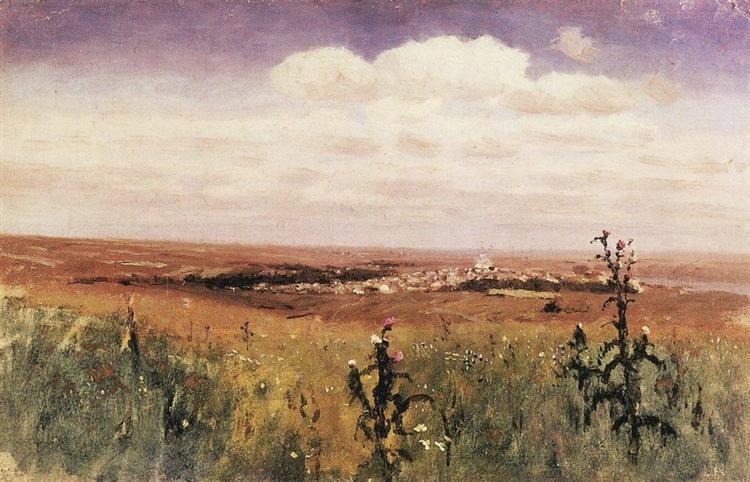
On the recommendation of one of my friends, I recently read the book The Tartar Steppe by Dino Buzzati. I found it thought provoking, especially at this time in my life, so I’m going to try to write a short blog post about it. I tried to make it easy to understand for people who haven’t read the book. I haven’t read or written all that much in the last seven years, so this might suck. Please bear with me.
Summary and Thesis
The Tartar Steppe is a short and depressing book with an ending that is implied by the first few pages. The protagonist, Giovanni Drogo, has just graduated from military academy and is sent to his first posting at the remote Fort Bastiani. The fort is nestled in the mountains that divide Drogo’s fictional country from The Tartar Steppe, a great plain from which hundreds of years ago enemies once poured, but which since then has remained a desolate wasteland. It quickly becomes clear that no one at the fort wants to be there. However, due to reasons including bureaucracy, apathy, comfort, and misplaced hope, almost no one can leave. The book traces Drogo’s uneventful life at the fort until his death. You can guess from the beginning that he is not going to leave, but why he stays is what The Tartar Steppe is about.
There are a few valuable life lessons to be drawn from the text, all of them roughly along the lines of “don’t be like Drogo”. Perhaps what struck me most is that Drogo lives out a failure of a life, all by making rather mundane, reasonable decisions. He is much more like most of us than we would like to believe, and realizes a catastrophically dim existence because of it. The frightening conclusion is that if normality leads to catastrophe, the onus to prevent it lies squarely with Drogo. That isn’t to discount the impact of external forces keeping him at the fort, but rather to assert that regardless of everything else, the burden of agency lies with oneself and oneself alone. Now I’ll get into more specific takeaways all under the same theme.
On Hope
The first is on the complex nature of hope. For the younger recruits at the fort, the possibility of an unlikely invasion from across the steppe excites them. They hope that one day an army will appear at their gates to give them purpose and glory, and so they stay at the fort, optimistically interpreting black dots on the horizon as distant enemies. We usually talk about hope as being a good thing, even if the hope is for something unlikely. In this case, it is the opposite. When the hope is placed in something outside one’s control, it becomes an excuse for inaction. This is actually common in everyday life. I’ve heard plenty of people talk about how they hope their work hours will decrease, that their significant other will change, that the political winds will shift in their group’s favor. The hope in itself isn’t bad, but when it becomes an excuse for doing nothing about a problem, it becomes dangerously anaesthetizing.
Another way that hope manifests in the book is as an object that one does not dare to possess. For the fort’s old guard who have hoped so long for an invasion but been spurned time and again, hope becomes a source of nothing but pain. They no longer dare hope for they are certain they will be let down like they have so many times before. This is a feeling I’ve had many times in life. Whenever I’ve failed at something over and over, be it at work, a sport, a social interaction, etc. it can feel so much easier to embrace the bitterness and stop hoping that I’ll do better. Unfortunately, this closes off the possibility of any kind of improvement. It’s why coaches tell athletes “pretend you have short-term memory loss”. That said, it’s still super important to learn from mistakes. It can end up being painful, but opening oneself up to hoping and failing again is perhaps the only path to improvement. The anime Hibike Euphonium explains beautifully the way that real striving necessitates opening yourself up to pain. I’m not sure the book is the greatest mirror for what I’m trying to say here, since the fort’s soldiers genuinely have nothing worth hoping for, but it did inspire the thought.
On Reliance on Others
One smaller point from the book that caught my attention was how Drogo consistently allows his life direction to be controlled by others. When he is advised not to do something, he doesn’t do it. When he is instructed to guard the fort, he bows his head and follows orders. He continually places his hopes of salvation in the hands of his betters in the military, waiting for one of them to take his side and relieve him of duty. This is perhaps a depressing takeaway, but it is no one else’s job except for yours to make your life better. When your life trajectory is buffeted by factors beyond your control, you gain little from dwelling on your own misfortune. It is much more worthwhile to examine what you can do on your own to improve your situation. I want to qualify this by saying that being close and co-dependent with other people is a beautiful and innately human thing. Just don’t rely on others to be the drivers of your progress. I find this kind of “no one else can save you” takeaway more than a bit lonely in a way that some other works like Evangelion try to get at.
On Wasting Life
Drogo’s greatest crime is that he wastes his life. He does so in the dullest way possible, standing guard against literally nothing. What’s worse is that he could just leave. There is no insurmountable obstacle keeping him there. At the same time, there are many small obstacles, both internal and external, that throughout his life discourage him from leaving. I think it is edifying to look at these with the goal of learning how not to let our own lives’ roadblocks stop us dead in our tracks.
One important internal obstacle that hinders Drogo is his tendency to always do what feels comfortable. This hits hardest when Drogo visits his hometown after several years at the fort. He finds himself a stranger in his own home, struggling to rekindle connections to the people, places, and ways of life that were once familiar to him. He finds the disconnect depressing and it saps at his will to leave the fort and return to normal life. The reality is that adapting back to life in the real world would indeed be hard for him, but certainly not impossible. In all likelihood, given some years of seriously applying himself to the task of reintegration with society, he would be vastly happier and more fulfilled than he is at the fort. But the near-term allure of running from a hard task and going back to what is familiar ends up winning out. The important takeaway here is, every time you make a decision, ask yourself if you picked what was best or what felt comfortable. What would yield results or what would let you preserve an easy narrative. When deciding something big like whether to change careers, move to a new place, begin or end a relationship, or even something small like how you’re going to spend your day, it can be extremely valuable to override the comfort-seeking instinct and impartially evaluate the pros and cons of each option.
The second major class of obstacle Drogo encounters throughout the book is the external one. At many points in the story, military officers tell him that some path or another to quitting is closed, or that it would be most convenient if he stayed a little longer. To be fair, these are real barriers to Drogo’s departure, but they are far from absolute. Drogo rarely puts up much of a fight when dissuaded from leaving, and more importantly, he never takes any more drastic but effective action, like simply quitting the military. He sees what in reality are hurdles (some of them are even pretty high) to his freedom as unscalable walls. This brings us to a straightforward lesson: don’t be easily discouraged. When pushing your case means offending someone but the potential gains of doing so are great, do not readily concede like Drogo did, but be willing to offend. When there are practical impedances to something you really want, overcome them. This is much easier said than done. In the gym, I see so many people train for several months or years, then run into a plateau or an injury and lose motivation to continue. Others find that their work limits their time or they’ve moved to a place far from good gyms and cease going altogether. Yes, these factors make working out much harder, but they are all surmountable. You can lift at night, you can do PT to recover from an injury, and you can work out in a park instead of a gym. If you care about something, don’t give up easily.
Closely related is the way that Drogo puts artificial limits on himself. He never once considers quitting the army, escaping criminally from the fort, or anything else of comparable severity. While these aren’t the greatest options, they seem obviously much better than spending the rest of life at Fort Bastiani. This way of thinking is utterly ingrained in all of us and yet is silently destructive. A simple example: it’s normal to do or say “I was too tired to do X” or “I didn’t have time to do Y”. The vast majority of the time, neither is true. You could have forced yourself to get up and do X. You could have cancelled some other event to make room for Y. The reason we think like this is it takes the blame off ourselves and moves it externally. At the same time we disempower ourselves. We lose agency and excuse inaction. This isn’t to say you always should do X or Y. Rather, I mean that it’s worth acknowledging “I could do X if I pushed myself to get up,” considering the benefits and drawbacks of doing so, and actively making an informed decision to do or not do X. On a lighter note, it is also just extremely helpful throughout life to consider weird and unfamiliar solutions to everything. Bored at 10 pm on a Thursday? What if you jumped in the ocean? Feeling lost in your career? What if you became a farmer? Might as well exploit free will as much as you can. When studying math, I always admired students who could think so freely as to be sure of stumbling on solutions no matter how far removed they were from the problem context at first glance. I think this applies to much of life.
To wrap up, what is most terrifying to me in reading The Tartar Steppe is that at each step of the way, Drogo’s decisions appear understandable. They echo decisions we all make all the time. Drogo is not a remarkably pathetic person; in fact, he is quite normal. If making normal decisions can lead to a remarkable failure of a life, then we had better do our best to not let that happen.
Acknowledgements
I used ChatGPT and Claude for feedback but all the writing is mine. Thanks to Alex for recommending the book!
Discussion
OMG there's even a chat, this is basically Reddit